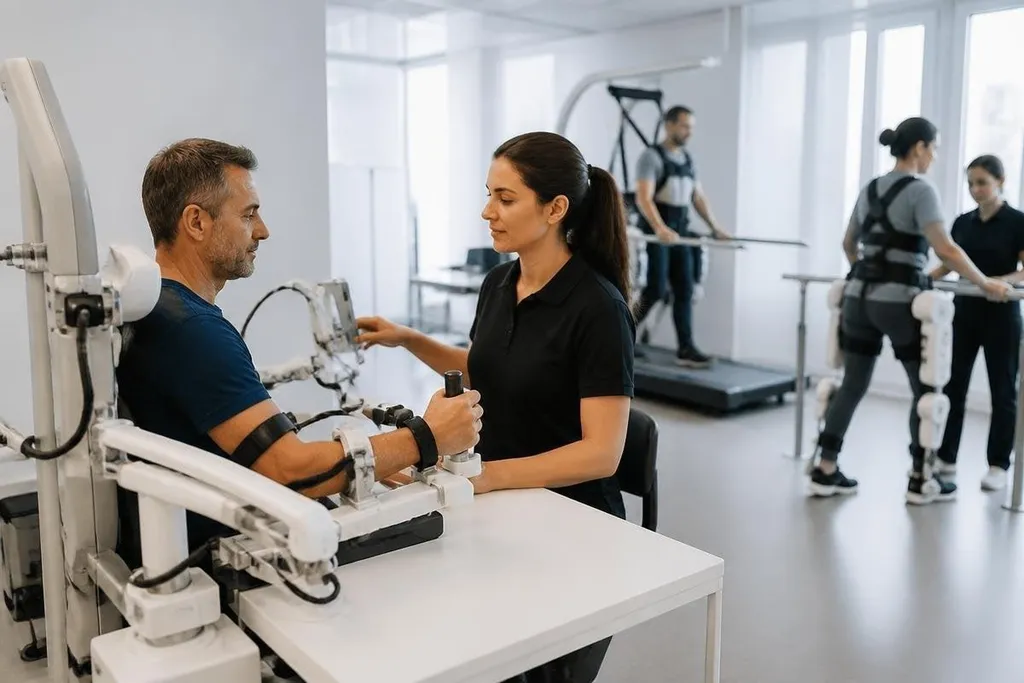
Rehabilitation robots can help people repeat hard movements after injury, surgery, or illness. The business opportunity sits in the work around that task: selling equipment, charging for sessions, supporting clinics, and turning treatment data into useful records.
Quick read
- Clinics can buy robots, lease them, or pay per session.
- Exoskeletons, robotic arms, and body-weight support systems serve different tasks.
- The buyer still needs proof that the robot fits staff time, patient care, and safety rules.
The first buyer is the clinic
A rehabilitation clinic may buy a robotic arm that guides a patient’s hand, an exoskeleton that supports leg movement, or a treadmill system that reduces part of a patient’s weight. Each product serves a different treatment task.
That difference shapes the sale. A supplier needs to present a clear use rather than a general promise about automation. A clinic director may ask how many patients can use the system in one day, how much training staff need, and what happens when the robot stops working. A hospital may add questions about cleaning, records, service contracts, and integration with its existing care process.
The business model can take several forms. A maker can sell the robot outright, lease it to a clinic, or charge for each treatment session. Leasing lowers the first payment, while a session fee shifts more financial risk to the supplier. The right model depends on patient volume and how often staff can use the equipment.
Services may earn more than hardware
The robot is only one part of the work. Clinics may need installation, staff training, routine checks, software updates, replacement parts, and help with patient setup. Those services create income after the first sale and give the supplier a reason to stay involved.
A provider could also run treatment sessions for smaller clinics. In that model, the clinic pays for access to the equipment and a trained operator instead of buying the whole system. This suits sites with limited space or too few patients to keep a robot busy each day.
The split between hardware and service matters because rehabilitation equipment sits close to patient care. A low purchase price means little if staff lose time during setup or the system needs long repair waits. A supplier that can show clear service times has a stronger case than one that only lists motor torque or sensor counts.
Data creates a second product
These systems can record movement range, exercise repetitions, assistance levels, and session duration. With the proper consent and privacy controls, that information could help therapists compare sessions and adjust treatment plans.
The data also gives makers another way to charge. A clinic might pay for storage, reports, or links to its patient record system. The hard part is proving that those records help care enough to justify another monthly bill. A chart with more numbers is not automatically a better treatment tool.
Before paying for those extras, a buyer needs a named robot, price, and care setting behind each supplier claim. Robotics business reporting from Robot24.com can put those details beside the offer before the next section tests where the business case fails.
Where the business case can fail
These systems face limits that a sales sheet may leave out. A device can guide a repeated motion, but a therapist still needs to choose the exercise, watch the patient, and change the plan when pain or fatigue appears.
Space can also block a purchase. A treadmill system may need a wide treatment area, while an exoskeleton may need storage, charging equipment, and a trained operator. A clinic with a small therapy room may get more use from a compact robotic arm than from a large walking system.
Payment is another open issue. A clinic needs to know which service covers the treatment, what records it must keep, and who pays when a session takes longer than planned. Without that path, the robot may sit unused even when the technology works.
I'd back service-led sales before a large hardware purchase. They let a clinic test patient demand and staff workload before it owns a costly system.
A buyer's checklist
Use these questions before signing a purchase or lease:
- Name the treatment task the robot will handle, then count the patients who need it.
- Measure setup time with the staff who will run each session.
- Ask for the full service plan, including parts, repairs, software, and response times.
- Check the room, power supply, storage area, cleaning process, and emergency controls.
- Confirm how patient data is stored, shared, deleted, and linked to care records.
- Set a review date and decide which usage and care measures will support renewal.
The strongest business may belong to the company that fits the robot into daily care, rather than the company with the most complex machine. Before a clinic buys, it should count sessions, staff minutes, room space, and service costs for one full treatment cycle.